
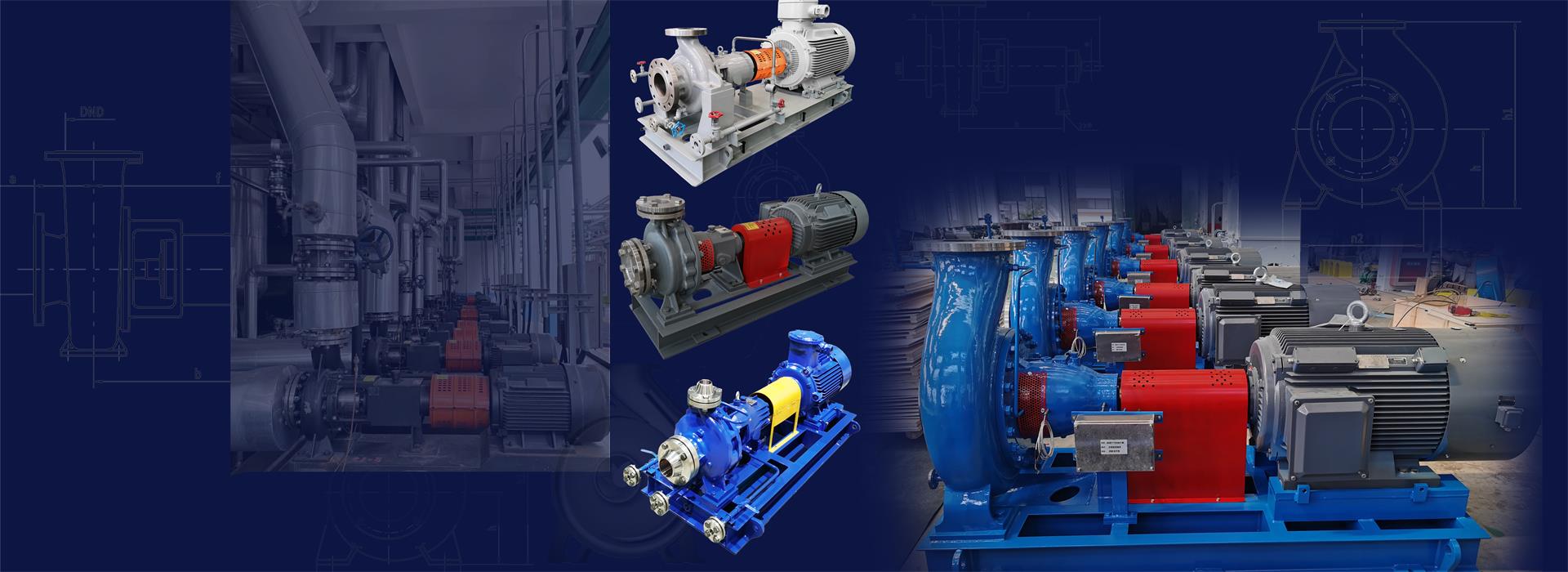
Advantages of YOUNAI Single Stage Centrifugal Pumps
- Optimized hydraulics, high efficiency, lower energy consumption
- Multiple materials and impeller designs available
- Multiple seal options for diverse process fluids
- Suitable for corrosive, abrasive or high-temperature applications
- Back pull-out construction, simplified maintenance
- ISO 5199, ASME B73.1, API 610 and API 682based designs.
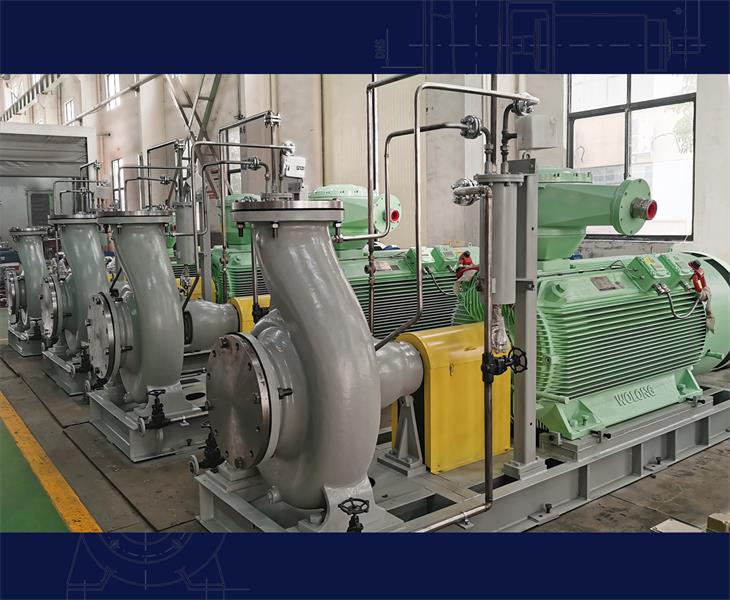
What Is a Single Stage Centrifugal Pump?
Single stage centrifugal pumps are among the most widely used fluid handling machines in industrial service. They have a simple, compact construction, yet their application range can be significantly extended through changes in impeller design and material selection. As such, they are commonly encountered equipment in the chemical and process industries by every engineer involved in design and operation.
As liquid enters the impeller eye, centrifugal force accelerates it outward through the impeller vanes and into the casing, where velocity energy is converted into pressure energy.
They are easy to install and simple to maintain. With customized configurations such as a suction barrel tank, thermal insulation or heating jacket, OH2 centerline-mounted structure, or an inducer, their performance can be significantly enhanced, delivering reliable performance under severe operating conditions.
Types of Single Stage Centrifugal Pumps
YOUNAI offers a range of single stage centrifugal pump types designed for different industrial applications, operating conditions, and international standards.
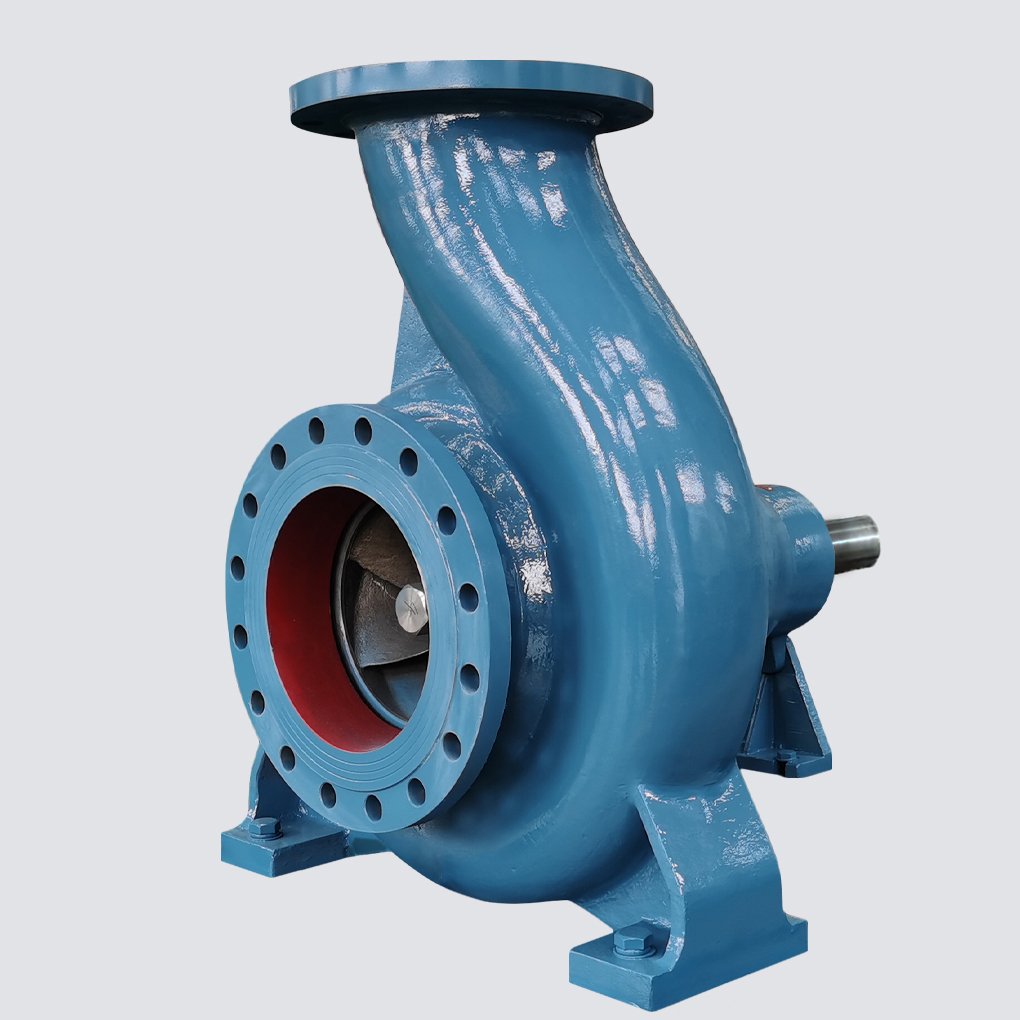
Flow rate: 0.6 ~ 2,400 m³/h
Head: 4 ~ 250 m
Closed, open & semi-open impeller available
Back pull-out design
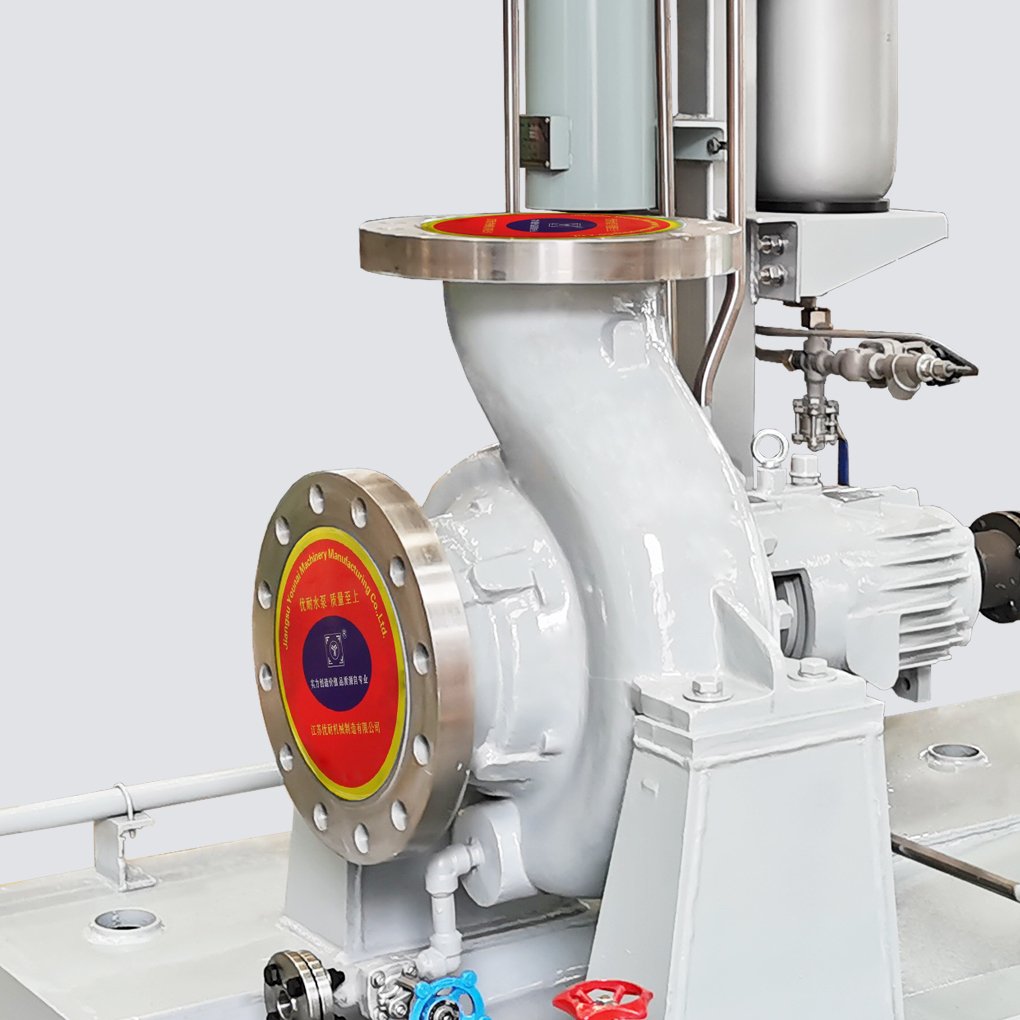
Flow rate: 3 ~ 2,250 m³/h
Head: 3 ~ 230 m
Max. temperature: 450°C
Conform to API 610 / API 682 standards
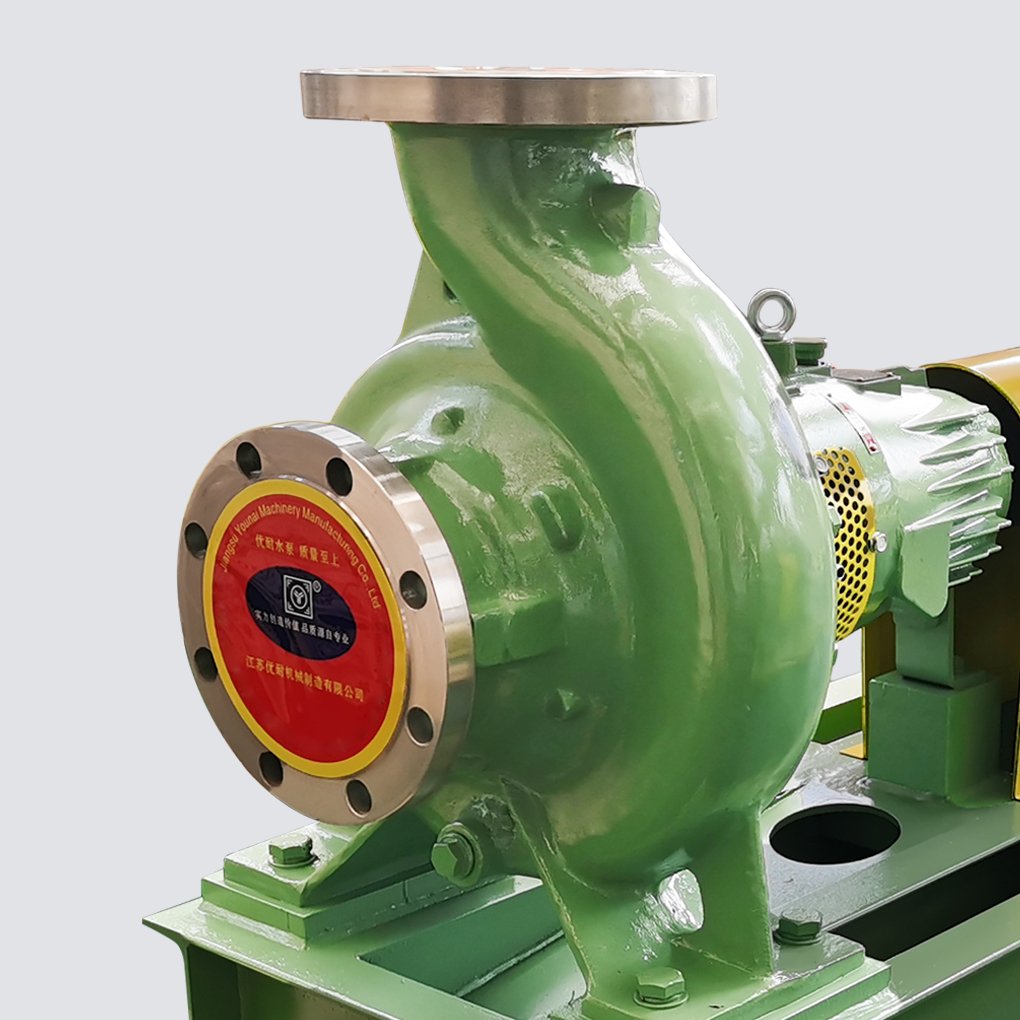
Flow rate: 0.6 ~ 2,400 m³/h
Head: 4 ~ 250 m
Wide range of materials available
Multiple seal options available
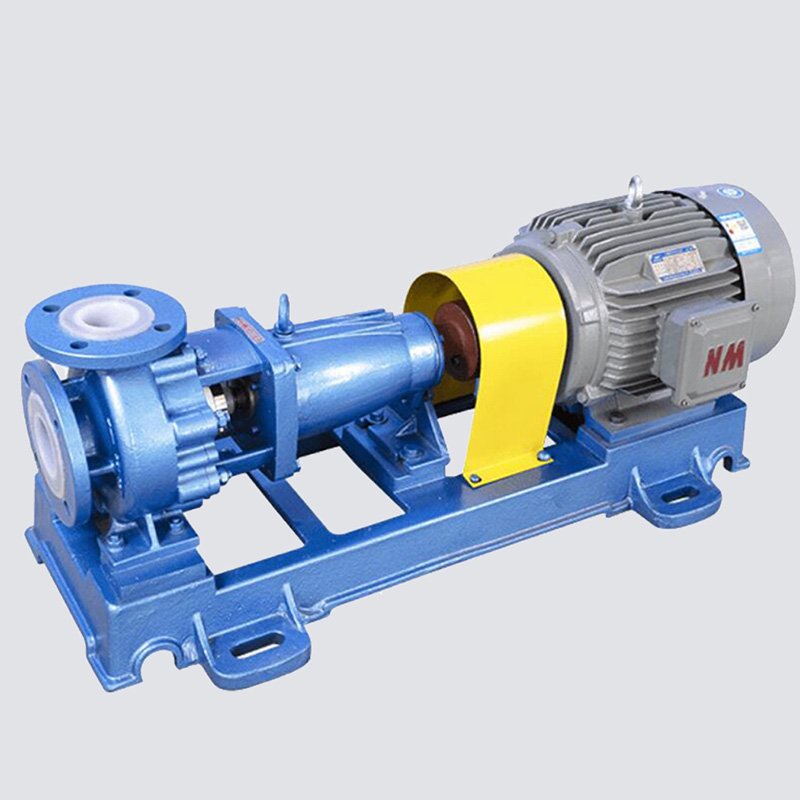
Flows to: 0.6~480 m3/hr
Heads to: 2.5~80 m
Lining material: PTFE / PFA
Typical Service: Sulfuric Acid Transfer
Engineered for Reliable Industrial Service
YOUNAI single stage centrifugal pumps are engineered for stable and reliable continuous operation across a wide range of industrial applications. Designed to deliver high efficiency, operational reliability and extended service life, they ensure dependable performance even under demanding process conditions. Key engineering features include:

Advanced hydraulic design ensures high efficiency, reduced energy consumption and lower operating costs throughout the pump’s service life.

Designed with low Net Positive Suction Head Required (NPSHr), the pumps help minimize the risk of cavitation, maximizing performance.

Dynamically balanced impellers reduce vibration and mechanical stress, contributing to smoother operation, extended bearing life, improved reliability and longer MTBF.

Multiple impeller designs are available to suit different fluid handling requirements, ensuring excellent application flexibility.

Multiple material options and customized configurations are available for specific application requirements or demanding operating conditions.

The back pull-out design allows easy maintenance and inspection without disturbing the piping system, reducing downtime and maintenance costs.
Material Selection
The application of corrosion-resistant materials significantly expands the application range of single stage centrifugal pumps. Proper material selection ensures reliable operation in chlor-alkali service, acidic media (including hydrochloric acid, nitric acid and sulfuric acid), and brine service conditions, contributing to extended service life.
- Carbon Steel
- Stainless Steel (304 / 316 / 316L)
- Duplex & Super Duplex (2205 / 2507/ CD4MCu/ 904L/)
- Nickel / Nickel Alloys / Hastelloy B / Hastelloy C
- Titanium / Titanium Alloys / Monel / Zirconium Alloys
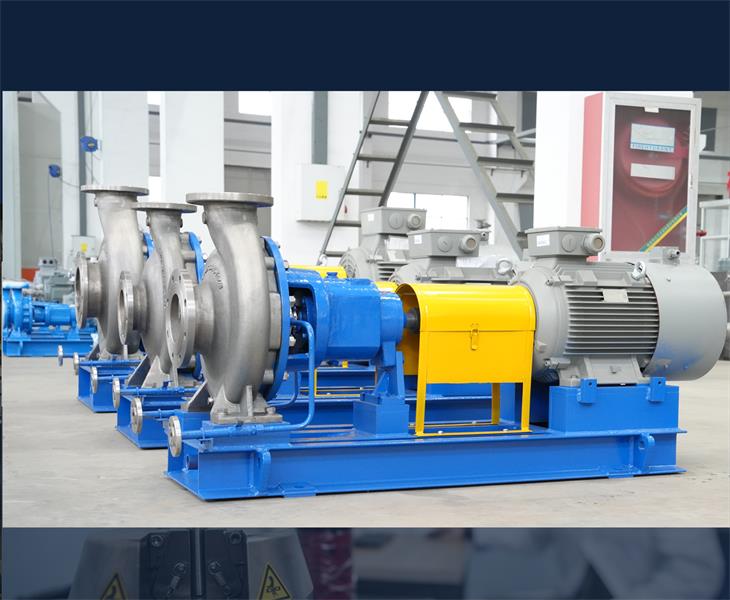
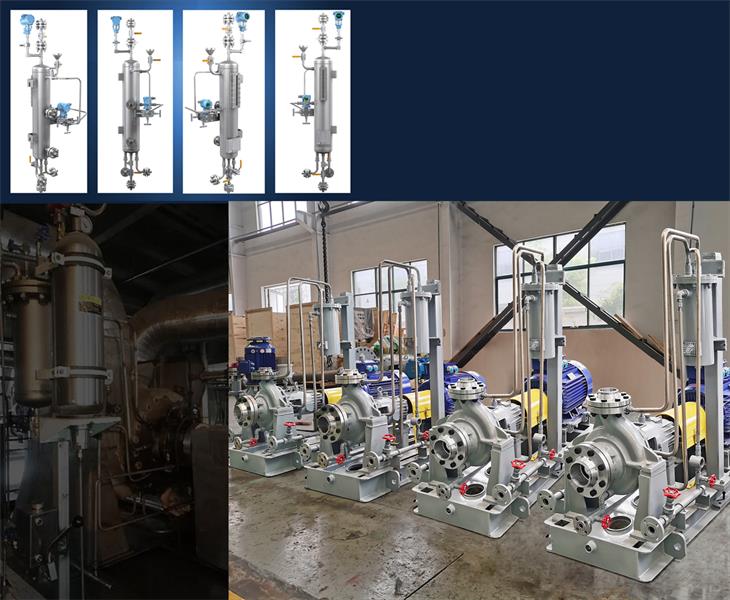
Mechanical Seal Configurations
Selecting the right mechanical seal and flush plan is not a matter of catalog matching — it requires a precise understanding of fluid characteristics, operating pressure, and temperature conditions. A pump that is correctly specified but paired with an inappropriate flush plan will fail in service.
YOUNAI engineers evaluate each pumping application individually and provide tailored pumping solutions based on process requirements. Single stage centrifugal pumps are configured with single, double, or cartridge mechanical seals, and supported by flush plans ranging from API Plan 11 through 53B — matched to the specific demands of toxic, flammable, corrosive, or high-temperature media.
Application

Single stage centrifugal pumps for corrosive, hazardous and process-critical fluids in chemical manufacturing and industrial processing.

Designed for refinery, LNG and hydrocarbon processing applications requiring API 610 compliant pump systems.

Reliable pumping solutions for industrial water supply, HVAC, condensate systems, cooling water circulation and wastewater handling applications.
Why Choose YOUNAI
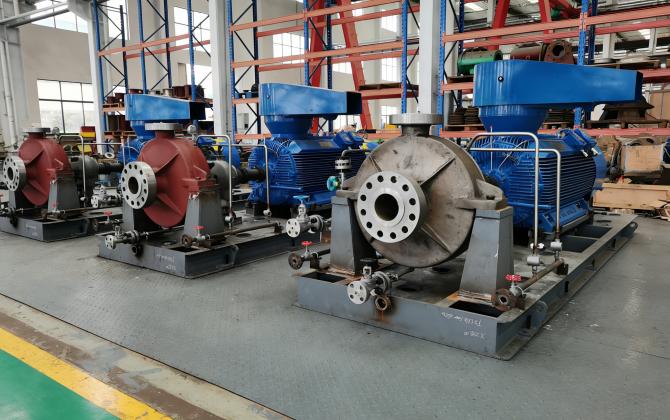
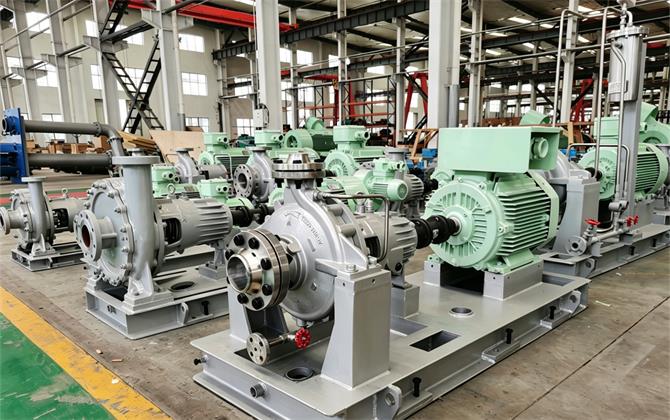
- More than 30 years of experience in manufacturing single stage centrifugal pumps for industrial water treatment, chemical and petrochemical applications.
- Every pump is configured according to actual process requirements, including materials, sealing systems and hydraulic performance.
- In-house hydraulic optimization helps improve efficiency, reliability and long-term operating performance.
- Advanced manufacturing equipment and experienced machinists, assemblers and welders ensure consistent product quality.
- Manufacturing is carried out under an ISO-certified quality system, with designs available in accordance with API 610 and API 682 standards.
- Technical support is available throughout the project, from pump selection and engineering consultation to commissioning and after-sales service.
A single stage centrifugal pump contains only one impeller inside the pump casing. When driven by the motor, the rotating impeller generates a moderate level of pressure and flow. In contrast, a multistage pump contains multiple impellers arranged in series. Each impeller represents one stage, and the pressure generated by each stage is added together, allowing the pump to achieve significantly higher discharge pressures.
Multistage pumps are typically used in high-head applications. When the required head can be achieved with a single stage pump, it is often the preferred choice due to its simpler construction, easier maintenance and lower overall cost.
Single stage centrifugal pumps are used in almost every modern industrial and agricultural sector. Thanks to their adaptability and the wide range of available sizes, materials and configurations,they are suitable for a wide range of applications, from water supply and irrigation to chemical processing, petrochemical production, and oil and gas operations, handling everything from clean water to complex process fluids.
Yes. Where the required flow rate and head can be met, a single stage centrifugal pump is the first choice due to its simple and compact design, ease of maintenance, and available in the widest range of market options. With the proper material selection and sealing arrangements, it can handle a broad range of process fluids. Material selection should be based on fluid composition, concentration, temperature, and operating conditions.
Yes. Single stage centrifugal pumps can be designed to handle a wide range of liquid temperatures up to 450°C, depending on the pump structural design, materials, and sealing arrangement.
For high-temperature applications, YOUNAI offers the OH2 single stage centrifugal pump (centerline-mounted, per API 610), where the centerline support design minimizes thermal expansion and eliminates coupling misalignment caused by heat — a critical feature for reliable high-temperature operation.
Seal chamber geometry, flushing and cooling arrangements (such as API Plan 23), and bearing configurations are all specified to match high-temperature requirements, ensuring reliability.
Single-stage centrifugal pumps are widely used across industries for conveying high-temperature process fluids — from hot water and thermal oil to steam condensate and high-temperature chemicals.
NPSH (Net Positive Suction Head) is the minimum suction head required at the pump inlet to prevent cavitation. Cavitation occurs when the local pressure inside the pump drops below the fluid’s vapor pressure, causing the liquid to vaporize and form bubbles. When these bubbles collapse, they generate noise, vibration, and impact damage to the impeller and casing walls. Prolonged cavitation significantly shortens pump service life. Every centrifugal pump has a required NPSH (NPSHr), determined by the pump’s hydraulic design. The available NPSH (NPSHa) of your system must exceed NPSHr — with a recommended safety margin of at least 0.5–1 m — to ensure stable, cavitation-free operation. NPSH analysis is therefore an essential step in pump selection and system design. YOUNAI’s optimized hydraulic design gives our single-stage centrifugal pumps a low NPSHr, providing greater operational flexibility and protecting your system across a wider range of conditions.
For general industrial service, single stage centrifugal pumps are manufactured to ISO 5199. For petroleum, petrochemical and natural gas applications, API 610 is the applicable standard, with mechanical seal arrangements configured in accordance with API 682.
YOUNAI offers a complete range of single stage centrifugal pumps covering ISO 5199, ASME B73.1, API 610 and API 682, allowing customers to specify the standard that fits their industry requirements and project specifications.
Yes. YOUNAI has the capability to design and manufacture customized single stage centrifugal pumps, covering hydraulic design, performance prediction, and material selection. Pumps for chemical, petrochemical, and oil and gas applications are all custom-engineered and built to order. Reference lists of pumps operating under similar conditions are available upon request.
Yes. YOUNAI supplies spare parts for all supplied single stage centrifugal pumps, including custom-manufactured impellers, casing covers, and other critical components, ensuring proper fit, full compatibility, and reliable performance. We also provide comprehensive after-sales support throughout the service life of the pump, including installation guidance, commissioning assistance, technical support, troubleshooting, and on-site service when required, helping maintain reliable operation and long-term equipment performance.
Single Stage Centrifugal Pump Efficiency: How Design, Materials, and Maintenance Impact Performance
Single stage centrifugal pump efficiency is not a fixed specification — it is a result. It emerges from every decision made across the full manufacturing process: theoretical hydraulic design, casting, precision machining, assembly, and final commissioning. Higher efficiency means lower energy consumption and reduced operating costs — a direct impact on the bottom line. For engineers and procurement professionals evaluating single stage centrifugal pumps, understanding what drives efficiency is the first step toward making the right specification choice.
Why pump efficiency matters
Pump systems are estimated to consume approximately 10–20% of the world’s electricity, making them one of the largest industrial energy users. Because centrifugal pumps represent the vast majority of installed pump equipment worldwide, improving centrifugal pump efficiency can have a significant impact on global energy consumption and carbon reduction efforts
Beyond energy, efficiency is a proxy for reliability. A pump operating close to its best efficiency point (BEP) experiences lower internal loads, reduced vibration, and longer component life. Even a small improvement in pump efficiency can result in significant energy savings over the equipment’s service life.
Hydraulic design and flow passage optimization
Hydraulic design is the foundation of pump performance. With CFD, the outcomes of fluid machinery design can be directly calculated and validated, significantly advancing both theoretical modelling and performance verification for single stage centrifugal pumps.
At the same time, centrifugal pump design remains a discipline that is half theoretical, half empirical — and in practice, a strong dependence on accumulated experience is still essential. This is precisely where YOUNAI’s advantage lies: more than 30 years of production experience, combined with rigorous hydraulic theory, enable the development of hydraulic models with superior performance characteristics.
The volute casing deserves particular attention in single stage centrifugal pump optimization. The volute serves a critical function: it collects the high-velocity liquid discharged from the impeller with minimum loss and directs it toward the pump outlet. In doing so, it eliminates the rotational motion of the flow, converting as much of that rotational kinetic energy as possible into pressure energy, while simultaneously reducing flow velocity to minimize losses in the downstream pressure piping. Advanced modelling allows flow passage geometry to be optimized before a single casting is produced, refining the internal flow path to minimize turbulence, recirculation, and hydraulic losses.
High-quality casting combined with precision grinding and polishing can significantly improve internal surface smoothness, YOUNAI pumps minimize hydraulic losses and deliver consistently high efficiency across a wide operating range.
YOUNAI’s high-quality casting combined with precision grinding and polishing can significantly improve internal surface smoothness, minimize hydraulic losses, and deliver consistently high efficiency across a wide operating range.
Material selection for different fluids
Material selection has a direct impact on both efficiency and long-term performance. The properties of the pumped medium determine the required corrosion resistance, wear resistance, temperature capability, and mechanical strength of pump components. YOUNAI’s engineered material solutions ensure long-term hydraulic performance, reliability, and service life — even under the most demanding operating conditions.
Corrosion-resistant materials commonly used:
- Stainless Steel304 / 316 / 316L, Duplex Stainless Steel 2205 / 2507 / CD4MCu / 904L
- Hastelloy B / Hastelloy C
- Titanium / Titanium Alloys (TA2, TA9, TA10)
- Nickel / Monel / Zirconium
Slurry pumps (widely used in the mining industry) are structurally also single stage centrifugal pumps, yet they are rarely discussed alongside pumps handling water or chemical media. However, certain process conditions fall between these two categories, presenting a real challenge for both procurement teams and pump manufacturers alike. For these demanding duties, wear-resistant single stage centrifugal pumps (distinct from dedicated slurry pumps) require materials specifically selected for abrasion resistance:
Wear-resistant materials for abrasive applications:
- High Chrome White Iron (15% Cr – 2% Mo)
- High Chrome Alloys
- Specialized hard-facing materials
Excessive wear progressively alters the original hydraulic geometry of the impeller and casing, resulting in efficiency loss and reduced head generation capacity. Correct material selection from the outset is therefore not only a reliability decision — it is a long-term efficiency decision.
Manufacturing precision and surface finish
An advanced hydraulic design can only deliver its intended performance when manufacturing precision meets the required standard. Even the most carefully engineered pump will underperform if dimensional tolerances are not held tightly during production.
Both dynamic and static balancing of the impeller are essential. Even minor imbalance generates vibration that increases bearing loads, accelerates component wear, and significantly shortens service life.
Surface finish quality in flow passages is equally critical. Castings are progressively ground and polished to achieve low surface roughness values, reducing skin friction losses and improving overall hydraulic efficiency. YOUNAI’s precision manufacturing process — from dimensional control of impeller clearances and wear ring fits to shaft concentricity — ensures that every pump leaves the factory performing as close to its theoretical design as possible.
Mechanical components affecting efficiency
Although hydraulic design receives the most attention, auxiliary mechanical systems have an equally significant influence on overall pump performance.
Mechanical Seals
The primary function of mechanical seals is to prevent fluid leakage. When handling corrosive, abrasive, flammable, or toxic media, the reliability demands placed on the sealing system are particularly stringent. Improper seal selection or seal failure can result in:
- Leakage of hazardous or environmentally sensitive fluids
- Safety risks to personnel and equipment
- Corrosion or damage to adjacent components
- Unplanned shutdowns and production losses
Bearings: Bearings support rotating components and maintain shaft stability. Damaged or improperly lubricated bearings increase mechanical losses and vibration levels, which in turn accelerate wear on other components. Routine inspection and lubrication are fundamental to sustaining pump efficiency and extending service life.
Couplings: Coupling misalignment introduces additional radial and axial loads on the shaft and bearings, increasing power losses and accelerating bearing and seal deterioration. Precision alignment during installation and commissioning is a critical step that directly determines long-term equipment reliability.
Baseplates and Structural Support: A rigid and correctly installed baseplate minimizes vibration transmission and ensures stable operation throughout the pump’s service life. For single stage centrifugal pumps handling high-temperature media, the OH2 type is recommended. Its centerline-mounted design allows thermal expansion to occur symmetrically about the shaft centerline, minimizing thermally induced misalignment, reducing vibration, and preventing coupling overload.
Operating conditions and system matching
Even the most efficient single stage centrifugal pump will deliver reduced performance if it operates under unsuitable system conditions. Unlike controlled test conditions, the actual operating point of a pump in the field is determined by the system resistance curve (defined by pipe diameter, length, fittings, elevation changes, and valve positions) rather than the pump itself.
When a pump is forced to operate deviating from its best efficiency point (BEP), efficiency drops and internal loads increase, accelerating wear on bearings, seals, and other components. Variable frequency drives (VFDs) offer an effective solution, allowing rotational speed to be adjusted dynamically so the pump maintains operation close to its BEP across a wider range of flow conditions, reducing energy consumption and extending the service life of the entire pump assembly.
Maintenance practices for sustained efficiency
Simple routine inspections and timely maintenance are often the most effective ways to preserve pump efficiency and reliability. In practice, operators should:
- Keep the pump and surrounding area clean.
- Monitor for unusual noise and vibration during operation.
- Check lubricant levels regularly.
- Replace lubricating oil at recommended intervals.
- Inspect paint coatings and touch up any areas where corrosion protection has deteriorated.
Address any leakage promptly. These basic maintenance practices help sustain pump efficiency, minimize unplanned downtime, and extend service life.
Conclusion: Efficiency is engineered, not assumed
Single stage centrifugal pump efficiency is the result of decisions made throughout the entire lifecycle of the pump, including hydraulic design, material selection, manufacturing precision, mechanical component selection and quality, system matching, and field maintenance. These factors do not operate independently; they interact with and reinforce one another. A weakness in any single area can limit the pump’s overall efficiency.
For end users seeking long-term efficiency, the most effective approach is to partner with an experienced pump manufacturer such as YOUNAI—one that applies the same level of engineering rigor to every stage of the process, from hydraulic design and material selection to manufacturing, testing, installation, and commissioning.